

Make Your Final Project
a Research Journey
The Student's Research Companion — The Purpose-driven Journey of Scientific Entrepreneurs
Omid Aschari & Benjamin Berghaus
Oxford University Press · 2023 · ISBN 978-0-19-285531-2
5
Phases
50
Mindsets
10
Expert voices
349
Pages
From obligatory project
to a first genuine enterprise
Each year around 50 million students worldwide complete a final academic project — thesis, dissertation, capstone. Most experience it as a burdensome obligation at the end of long years of study. It does not have to be this way.
The book reframes the final project: not as an exam to be passed, but as a first genuine scientific enterprise. At the centre is the concept of the scientific entrepreneur — a person who uses research deliberately to help an audience solve a problem.
We are Omid Aschari and Benjamin Berghaus. Together with our contributors around the globe, we collect, curate, and present the mindsets that can help you make the most of your final academic project.
Publication
The Student's Research Companion
Omid Aschari & Benjamin Berghaus
Oxford University Press, 2023.
349 pages · 5 phases · 50 mindsets
ISBN
978-0-19-285531-2
"Writing is discovering. This book is no exception."
— From the preface
Where are you right now?
The book accompanies the final project from start to long after submission — in five phases and 50 mindsets. Choose your phase to see all of its chapters.
For students. And for those who accompany them.
For students
The final project as an opportunity, not a burden.
-
The project is not an exam to be passed. It is the first genuine scientific enterprise — and thus the beginning of everything that comes after.
-
50 mindsets address concrete challenges: from the first writing block to the question of what completion actually means.
-
Not a recipe, but a conversation partner — opened where it is needed right now.
-
The book replaces no methodology. It addresses what methodology books are silent about: attitude, frustration, curiosity, responsibility.
For supervisors
Supervision as academic mentoring — and the little-discussed challenge that comes with it.
-
Hardly any university systematically trains supervisors. The book wants to close this gap — not with rules, but with reflection.
-
Every chapter contains an "Experienced peers' two cents" section: voices from 10 mentors from around the world.
-
The book encourages rethinking one's own role — from administrator to fostering companion.
-
Goal: supervision moments emerge that fully exploit the potential of the final project as a learning experience.
Ten mindsets from fifty
Each of the 50 chapters bears a title that names both an attitude and a challenge — an invitation to open the book where it is needed right now.
Relevance follows audience
The purposeful scientific entrepreneur
Renewable research energy
Why even bother?
Frustration is a fuzzy teacher
Relaxation as a research methodology
Fear of writing
Be kind to yourself
Feedback eats grades for breakfast
Share the fire
From the introductory chapter
Eleven voices, one panel of academic mentors
While writing the book, we contextualized our perspectives by speaking with academic mentors around the world. Every chapter carries a short "experienced peers' two cents" from this panel.

Ansgar Richter

Gundula Bosch

Günter Müller-Stewens

Kim Beasy
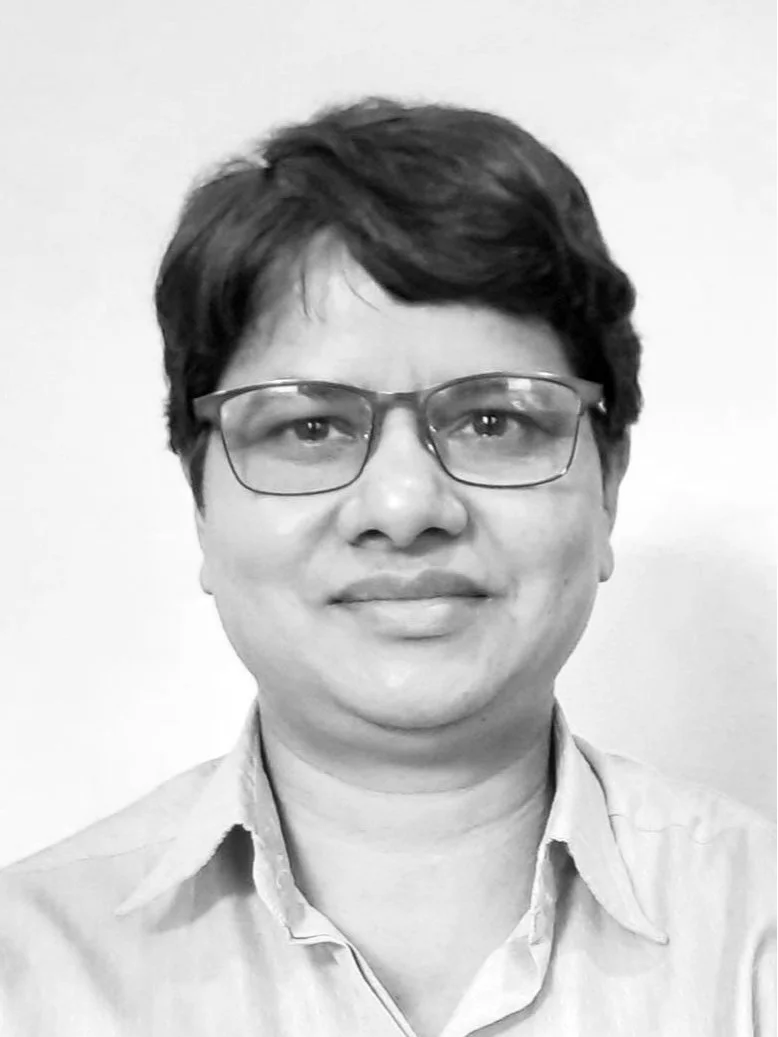
Madhu Neupane Bastola

Marc van Essen

Matt Farmer

Samer Attalah
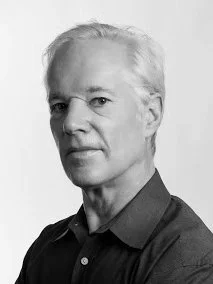
Steven Floyd

Timo Korkeamäki

Urs Jäger
What two student teams found
While writing the book, two student teams at the University of St. Gallen explored the student research experience from both sides — uncovering challenges and suggesting improvements for students and supervisors alike.
Their findings were synthesized into eleven challenges per side, each paired with a reframe and a concrete recommendation.
Read the findingsResearch Stride
The two student projects were conducted alongside Research Stride, a digital thesis-mentoring companion currently in its conceptual and prototyping phase — the digital sibling to this book.
50 million students worldwide work on a final academic project each year, and mentoring capacity rarely scales with them. Research Stride explores how a well-designed digital layer could help.
Where these ideas come from
Writing this book made us aware of how much our academic socialization shapes our thinking. Our perspective is rooted in entrepreneurial, self-leadership, and transformational thinking — traced largely to two influences: the Master in Strategy and International Management (SIM-HSG), co-founded by Omid in 2003 and ranked No. 1 worldwide for twelve consecutive years by the Financial Times, and the University of St. Gallen itself, where both authors have worked and taught.
Both institutions shaped the traits this book returns to again and again: a global mindset, analytical rigour, critical and creative thinking, maturity and integrity, and a habit of self-reflection. They did not appear because the manuscript was crafted to fit — they emerged as an echo of what we had come to consider the marks of a well-rounded academic.
Order or cite the book
Publisher
Order directly from Oxford University Press — use code AUTHFLY30 for 30% off.
global.oup.com →Individual chapters
Available via academic.oup.com, often free through your university library subscription.
academic.oup.com →Cite
Aschari, Omid, and Benjamin Berghaus. 2023. The Student's Research Companion: The Purpose-driven Journey of Scientific Entrepreneurs. Oxford: Oxford University Press.
DOI
10.1093/oso/9780192855312.001.0001
ISBN
978-0-19-285531-2
Get in touch
Interested in a talk, a workshop, or a conversation about the book — or about Research Stride?
Start a conversation