

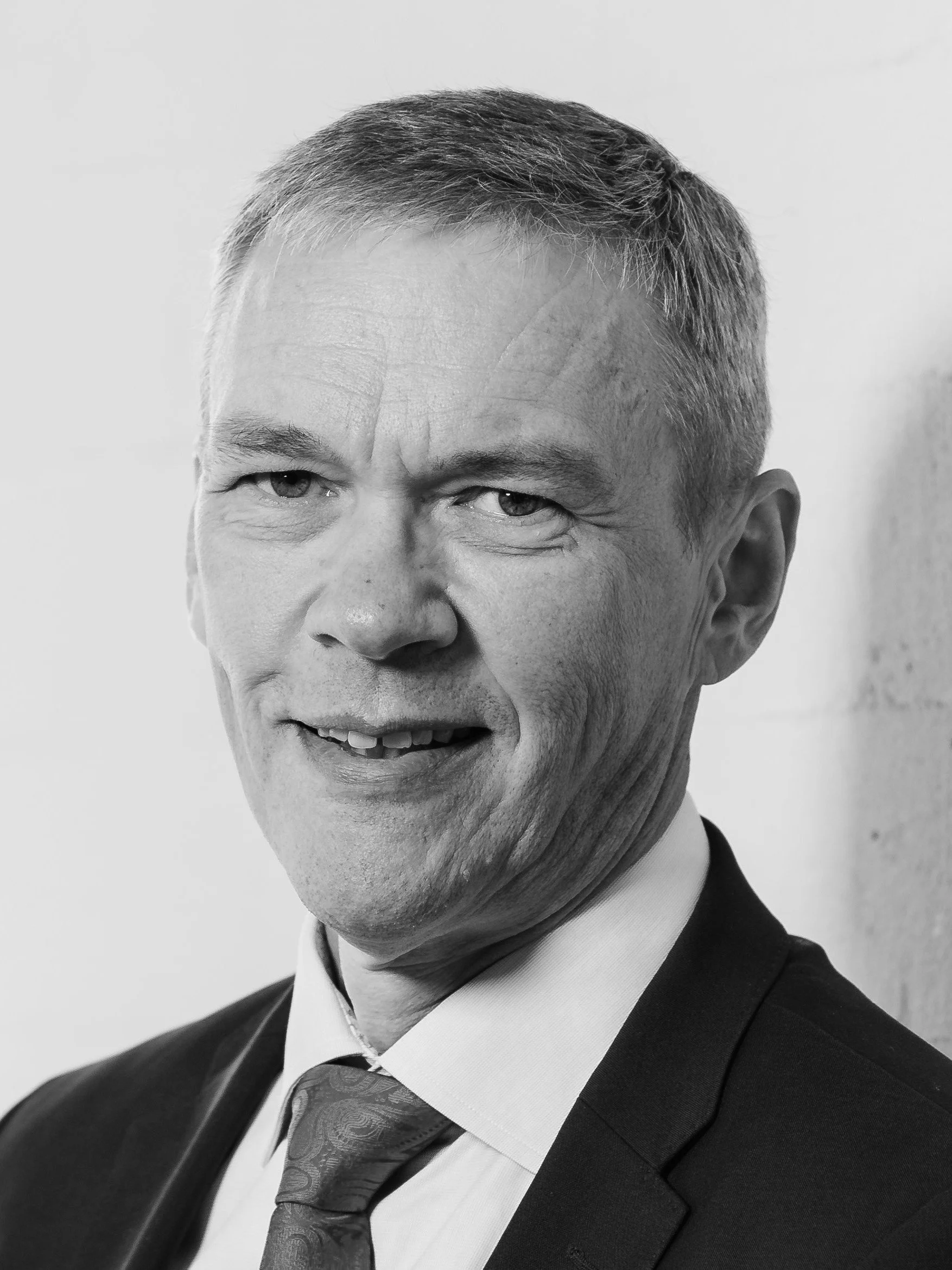
Timo Korkeamäki
Dean of the School of Business, Aalto University
We were fortunate to win Timo’s cooperation and insights through the link in the CEMS university network between Aalto University and University of St. Gallen. Timo is the Dean of the School of Business at Aalto. Before joining Aalto, Timo was professor of finance and head of the Department of Finance and Economics at Hanken School of Economics in Helsinki. Through our exchanges, Timo described an open and continuously growing perspective on the function and objective of academia – including whether universities should emphasize the "how" or the "why" of phenomena, the value of a focused research question, and the necessity to leave a problem be for a few days, sometimes.
Timo's thoughts on the subject
Be kind to yourself
“It is good to take distance for a while, days, or weeks or months, I don’t know. If I let it be for a while, it gets significantly better. When you are finally through finishing your study, taking all the bureaucratic steps, and everything is off your desk, it’s a bit of relief for many of us. Especially for a paper. I have sometimes returned to my own work and thought—Who wrote this? This is really good! That happens almost universally. I’ve had some experiences that every other day, it looks great, and every other day I am ready to throw it into the rubbish can. When we get so involved with our own work, it becomes difficult to look at it objectively. That gets better with time. I’ve seen this happen to my students, too. When they go back to the earlier work, it starts to look much better.” (Timo Korkeamäki)
Build well-dimensioned bridges
“As we are looking for the research question, one key recommendation is that the more specific you can make your research question, the easier you will make your life for your thesis process. If your question is “What is the meaning of life?”, your research will take a while. If you can frame the question very specifically, it will be much more motivating and easier to complete.” (Timo Korkeamäki)
Fortify your academic skills
“Students can show and educate themselves on why we are doing things in the business world. So that we are not only focusing on how, but also why. Learning the theoretical underpinnings of the business world. Their education becomes more future-proof this way. Students don’t only educate themselves on the problems of today, but they understand why they have to solve challenges today, and that will allow them to tackle challenges of the future. In the business disciplines, everybody is speaking about artificial intelligence, machine learning, robots, but the value of being able to think and argue is not going to decrease. The repetitive tasks that we do will be done by robots in the future. To teach how to hold the hammer when you’re trying to hammer a nail—that will be less valuable in the future because, for all those simple things that everyone can understand, there will be another solution. Rather, being creative, also being able to apply theoretical knowledge—I doubt that this will go out of fashion.” (Timo Korkeamäki)
Frustration is a fuzzy teacher
“Some people have unusual approaches to supervising. Some people may say: go to the mountains and come back when you have a finished thesis and I will look at it. Based on my experience—the first time someone works on a research project, they really don’t know what to do. Especially what to do when they hit the wall. About the language of the field, from data to methods to actually putting it on paper writing—you need a lot of help. Obviously, you can get done with your thesis by figuring it out on your own, but this is where supervisors can give giant value added by holding their hand and providing feedback.” (Timo Korkeamäki)
Help others understand you
“When I was a doctoral student, we had one doctoral seminar, which was likely the most painful seminar I took as a student. There were five of us, and we were assigned one paper at the very top of our field. Each week, we would meet and one of us would be assigned a paper to discuss, peel open, critique—but the expectation was that we would also read all the other four papers. So that we could discuss, contribute, ask questions that the person who was assigned to do it had missed and ask his understanding of what they thought about it. It was painful because these papers did not often open themselves on first sight. It required a bit of time to get into it—and you had to be able to discuss the merits and critique it. But that course has given me so much. There was only limited time, so you had to be efficient. The most valuable skill I took away was that I can read an academic text and on the first read get to the guts of it and comment on it. When I supervise, when I referee, when I do any of these tasks, this has been a huge time-saver. It was painful while it lasted, but it really paid dividends. When we get into academic jobs, a big part of that is reading other people’s work and provide feedback on it.” (Timo Korkeamäki)
Preparation determines motivation
“We have different types of students, and they seek different types of experiences in their thesis processes. If you try to impose the structure too heavily on them, some may be delighted, others might be very unhappy.” (Timo Korkeamäki)
Relaxation as a research methodology
“Sometimes you get these jumps forward, and occasionally, you just don’t move at all. It can be quite difficult if you’re in quicksand anyway, and you feel the pressure from society, from family, from peers if you are ever going to get done. What has worked for me was working on multiple fronts at the same time. You hit the wall somewhere, you let that mull and take on one of your other battles. At least psychologically, it is good for you, since you get a sense of moving forward. Maybe not on all things, possibly not even on the most important things, but at least you are moving forward. It is so important for you that you stay mentally healthy through the process. A big part of this mental health is the feeling that you are moving forward. So, you have to feed that.” (Timo Korkeamäki)
Relevance follows audience
“We need to be connected to practice. We cannot be philosophers who learn about real life while they are taking a walk. It is important to listen to the environment to keep our offerings up to date. At the same time, there is extra value in going through the why-question.” (Timo Korkeamäki)
Revise frequently
“ I really abused my supervisor in a mean way because he must have read between 50 and 100 drafts. They were not full drafts of the dissertation, but I’d write something, have him read it, and the next morning, the piece of paper would be waiting for me on my desk all red. The world’s best supervisor. I really abused his kindness. He is the benchmark for me. He’s the model I try to go after.” (Timo Korkeamäki)
Take in your accomplishment
“I don’t know anybody who would say: “my thesis process was completely painless, and I loved every day of it.” There is some pain and suffering baked into this whole process. What people should feel afterwards, when they look at their thesis again a year later, is that they should be proud of themselves. After all, they have passed through a filter that not many people have passed through. It is a good reason to pat yourself on the back. When you are working on your thesis, you have to be tough on yourself, you have to self-discipline, you have plenty of other people who are tough on you—your supervisor, your external evaluators. You receive a lot of criticism, and it takes a very thick skin to take on this criticism with kindness and get done even with the last lady who measures your margins. Once you have passed that stage, you’re entitled to look back and see that you did something pretty spectacular.” (Timo Korkeamäki)
Theory is there to help
“As a finance professor, I could be teaching in class how an IPO is structured, how the leading investment banks do it, and the factors that shape the outcome. But rather than just doing that, I’d like to have my students explore and understand why we have IPOs and why we have investment banks, and the theories behind the shape and structures of the deals that we see. I think that will make their education more future-proof. Corona is a great example of an unexpected situation that makes you think harder about the Why instead of the How. We are living in a world where things happen pretty quickly and unexpectedly, so it increases the value of knowing the theories behind it a little better.” (Timo Korkeamäki)
Throwing off a weight
“There is a point where you have to let your baby go. This happens with journal articles, too. You polish, and polish, and polish, and polish and there comes a time when you just have to say: I am done. Every so often an experienced supervisor can be a great help with that. They can tell you if and when you are done.” (Timo Korkeamäki)