

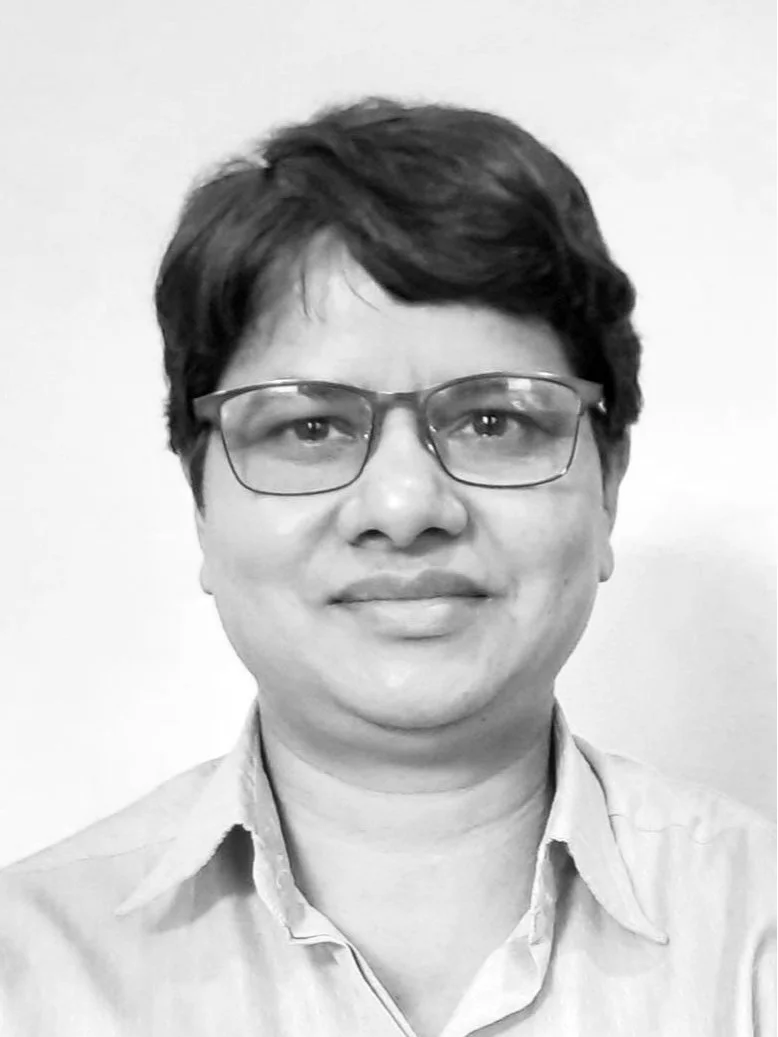
Madhu Neupane Bastola
Postdoctoral Fellow, Hong Kong Polytechnic University
We invited Madhu to join our panel after being impressed by her work on the positive and negative impact of phrasing feedback in supervisor-student relationships. Madhu is a lecturer at Tribhuvan University in Nepal and a Postdoctoral Fellow at the Hong Kong Polytechnic University, researching graduate research and supervision. Madhu shared compassionate perspectives on the experience of student researchers, including the detrimental and supportive power a harsh or kind word in feedback can have, and her conviction that supervisors need to be continuous learners themselves.
Madhu's thoughts on the subject
Be kind to yourself
“I was talking about my research to a supervisee, and it made me remember the time while I was writing my own thesis. If we as supervisors go back and remember how difficult it was for us, we can be sympathetic to the students. We need to see thesis writing from the students’ perspective, not from our perspective.” (Madhu Neupane Bastola)
Castle under siege
“You may get very critical comments from your supervisor or during your defence. Those who have a positive, growth mindset and motivation for learning will take these comments as learning opportunities, and will be less impacted by them. If we as supervisors can enhance that kind of mindset, I feel that adopting this type of motivational insulating would be a life-long achievement.” (Madhu Neupane Bastola)
Conduct a project
“Another skill comes into play here: independent study skills. Students need to select their topic, their area of focus, the resources that will be useful. Even if they will be getting support from their supervisor, there are so many things to do on their own which develop their independent study skills. That will be a lifelong asset for everyone who goes through this process—not only to complete their thesis, but to pick up skills that will be useful in any field, wherever they go. Even if they do not pursue research degrees or further education.” (Madhu Neupane-Bastola)
Grow forward
“Another skill comes into play here: independent study skills. Students need to select their topic, their area of focus, the resources that will be useful. Even if they will be getting support from their supervisor, there are many things to do on their own which develops their independent study skills. That will be a lifelong asset for everyone who goes through this process—not only completing their thesis but picking up skills that will be useful in any field, wherever they go—even if they do not pursue research degrees or further education.” (Madhu Neupane Bastola)
Growing into an expert
“We can help students sustain their will to learn if we take supervising students as the big responsibility that it is. We can choose to care about the student and his or her project. We can be mindful when we provide feedback. Not only that, but we can ask a student, encourage the student, motivate the student by saying, “Yes, this is a difficult job—but everyone before and after you faces these difficulties.” It is not only about the students who benefit from a growth mindset, but also the supervisors. If we take an encouraging and mindful approach, maybe we can create a spark in the students. A kind of fire. Potentially, that will energize him or her to go forward. I don’t like to be pessimistic in a challenging situation. I’d rather like to say: ‘We can make a difference!’ ” (Madhu Neupane Bastola)
Help others understand you
“During the process of writing or conducting their research, students will also develop their communication skills, e.g. collecting data, talking to people, seeking sources, seeking help from learning centres, academic advisors, utilizing their networks. So, communication skills become key. During the writing, they also need to present their thesis or their research multiple times. They may have to make a presentation when defending their proposal. Often, they need to defend their thesis several times. Communication skills and presentations skills are critical here.” (Madhu Neupane Bastola)
Maturing your mind
“A thesis might accomplish many things. First among those, a thesis is intended to help graduate students develop their research skills. We call master’s theses “capstone projects”, others call them “highly critical components” which synthesize everything that the student has learned during that programme. The thesis offers the opportunity to the student to work on their own to materialize and translate what they learned from a course at university into the reality of their research project. It is a major opportunity not only for learning, but for making big decisions and sustaining focus for a long time on one project.” (Madhu Neupane-Bastola)
Mitigating mental overload
“It is very difficult—even for us more established and experienced writers—when we need to write something new. We know it will be difficult. We don’t know where to start. If we just have a kind of example or a structure we can go through, we can understand and learn from that how to develop such a document, ourselves. Therefore, we can help our students to follow that process and try to adopt key characteristics of the writing. I still remember, while I was doing my Master’s thesis at the University of Sydney, I handed in my draft, and my supervisor said: “This kind of methodology isn’t good enough, and the project is not going well—I was expecting more from you! Please read my paper.” So, he sent me a paper that was somewhat related to my research. When I went through his methodology section, I realized how much detail I needed to include in mine. I realized that I had missed out a lot of information—e.g. details about participants, details about instruments that I was using, information about how I constructed instruments—so many things. Then I realized the value of good guidelines. That’s how examples can reveal their value.” (Madhu Neupane Bastola)
Revise frequently
“If we read their thoughts with a sense of interest, we will find some areas where he or she has done well, and we will find some areas where he or she can improve. So, we can give directive comments—not in the sense of giving instruction, but in the sense of developmental feedback. During my research, I analysed comments provided by supervisors. In numerous instances, these comments identify what’s wrong with the student’s writing. But they fail to suggest avenues for improvement—what can the student do?” ((Madhu Neupane Bastola)
Rigour suggests approach
„Why do we need research skills at all? To help us in making informed decisions. Identifying what is “right”—even though “right” and “wrong” are relative terms. Scientific approaches help us to make informed decisions based on sufficient evidence. Not to take things for granted. That is why research skills do not only apply to the writing of a thesis and graduating, but to each and every sector of life.“ (Madhu Neupane-Bastola)
Share the fire
“We cannot give what we do not have. If we do not know how to improve their research, how can we guide students? Supervisors need to be continuous learners. Difficulties will be there—there are many students. But only if we take the responsibility of supervision sincerely can we make a difference. One of our goals is to become better supervisors every year.” (Madhu Neupane Bastola)
Skills and the will to grow
“The most useful mindset appears to be to bring a growth mindset. I also like to call that having a clear motive or motivation - your motivation for doing the research. The way you realise the purpose of writing the thesis – so: “Why are you doing that?” The most important mindset for succeeding in the thesis project is to consider it a learning opportunity. It’s not just a component for graduating, but there is a secondary purpose: it’s a great learning opportunity! In the end, working on your thesis is the best opportunity for receiving one-on-one mentoring – a mode of teaching and learning that universities do not offer in most other situations. If you have a learning motive, it encourages you to invest time and effort without getting too tired. If you do not identify with the project, the outcome will not be good. If you know why you are doing it, if you take it as a learning opportunity, so learning to make informed decisions, that will be a life-long skill adopted.” (Madhu Neupane-Bastola)
Strange birds
“A single phrase might hurt a student a lot. There is already a huge power gap between a supervisor and students—even if we are friendly with our students. They are being evaluated for their work. In this situation, they already feel slightly awkward. In such a situation, if we are not mindful of the type of language that we use, we might unintentionally damage their confidence. There is also a cultural difference here: what might be slightly more carefully phrased in some contexts can be very critically framed in other contexts. Even softening slightly—“this could have happened to me as well”—can already help. Then, combine with developmental feedback. Avoid a harsh tone. Be careful about your language.” (Madhu Neupane Bastola)
Writing as modern architecture
“ Students need to report their thesis in language. This means that another critical skill employed is academic writing. This skill is discipline-specific. Each discipline has its own way of constructing knowledge, be it humanities, education, science, engineering, or any other discipline. Each discipline has its own way of constructing knowledge, and what is considered to be knowledge differs from discipline to discipline. Graduate students need to be able to communicate in that acceptable manner that is respected in their discipline.” (Madhu Neupane Bastola)