

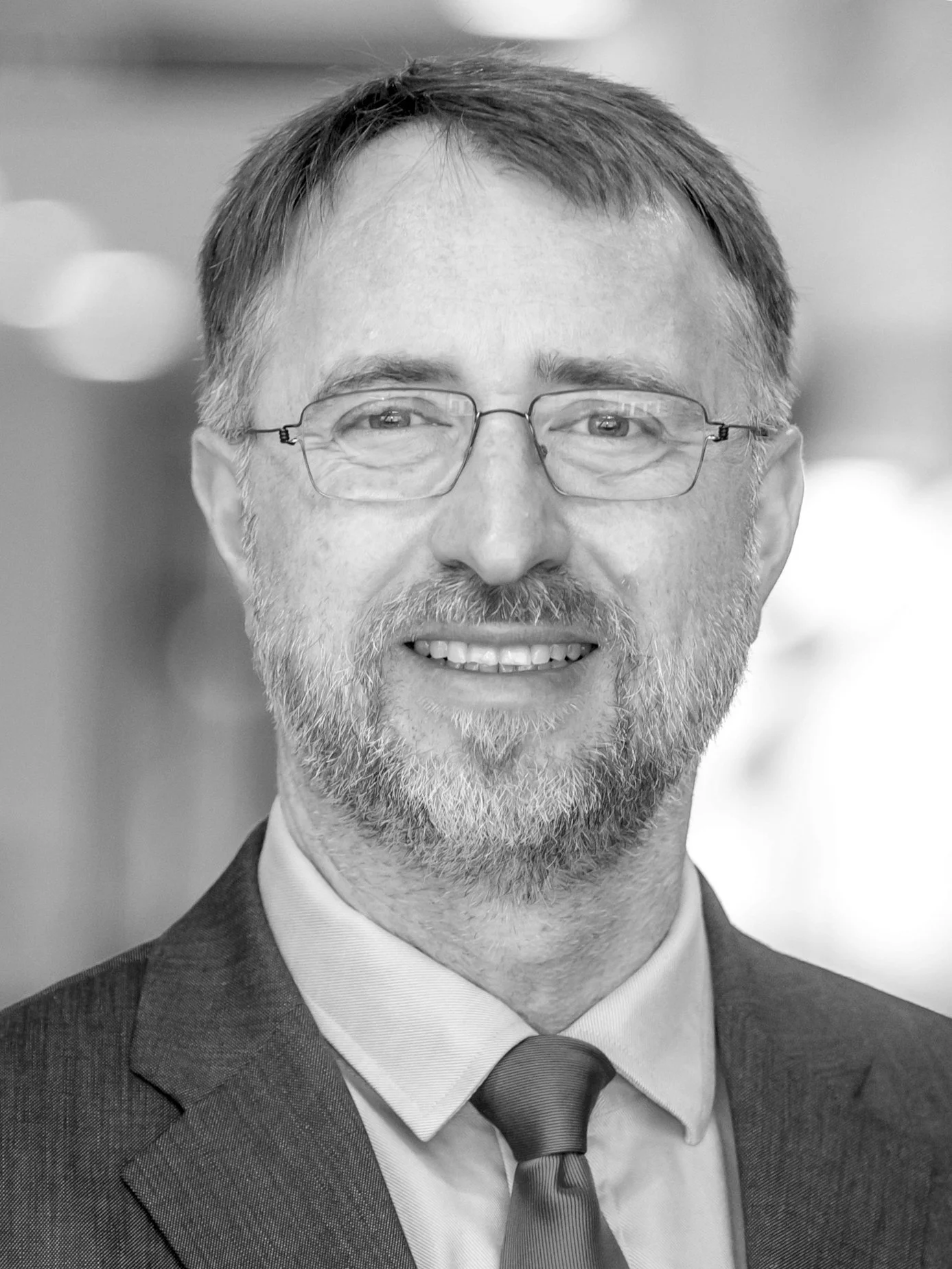
Ansgar Richter
Dean, Rotterdam School of Management, Erasmus University
We were fortunate to win Ansgar for the panel of academic mentors through the CEMS university network between Rotterdam School of Management and University of St. Gallen. Ansgar is Dean of Rotterdam School of Management (RSM) and a professor of Corporate Strategy, Organisation and Governance; he received his PhD from the London School of Economics. Ansgar shared perspectives of encouragement and empowerment, noting the likeness of students and supervisors despite all differences – “both are, in fact, students” – and pointed to the value of working with primary data, finding a purposeful topic, and knowing your audience.
Ansgar's thoughts on the subject
Build well-dimensioned bridges
“A thesis is an opportunity to do an original piece of research, more so than any other course during one’s studies. Under the guidance and supervision this involves asking the right set of questions and figuring out what a good research question actually is. This is half of the work of decent supervisory work. For the student, it is to define a good research question and then go on to address and answer the question in the best way possible.” (Ansgar Richter)
Castle under siege
“Supervisors are part of this invisible debate by being part of academia. We have a thesis defence and I try to challenge my students and hope they challenge me as well. It is a matter of convincing each other. This is to be regarded a privilege. As a supervisor, I am as much a student as my student. This is the definition of good research because it involves people who are trying to learn together and from each other. I can only learn from them if they defend their work and put things in context and seeing the limitations of it. To be open to this kind of debate, to subject oneself to it, is crucial as one embarks on the thesis. I see too many students who ask the supervisor as to what they are writing is right. This is the wrong question to ask. They should write something that they are convinced about, based on the research they have done. And that must be so strong, that they can defend it.” (Ansgar Richter)
Fear of writing
“I think it is helpful to divide the work into chunks, especially PhD thesis work. Concretely, structuring the thesis as individual papers, where each is a journey in its own right. This is helpful. With BA/MA thesis work, you don’t have that luxury. However, a MA thesis should be structured as a paper. As a supervisor, you can provide that structure.” (Ansgar Richter)
Help others understand you
“When taking the role of co-reader or co-supervisor, I can pass on some encouragement to more junior supervisors. The way to get them into a different mindset is to expose ourselves with our own work. One practice, that I fostered, was called “The Writing Workshop”. In these writing workshops, we invited everyone to come and subject their papers to discussion. There were no presentations; the only ground rule was that whenever you attend a workshop, you must have read in advance the paper to be discussed. Second, you must come with your written comments on the paper. The author gives a few sentences of introduction, and then it is open for discussion. Everyone contributes their comments and discusses the paper in a very honest way—obviously in the anticipation that their own paper may be next in line. Afterwards, all the workshop participants hand over their comments to the author of the paper discussed. So, as an author, you get a stack of papers with others’ comments. Essentially, this is a frank review for the author. It doesn’t matter who you are, what matters is the discussion. You step out of the role of an accomplished professor. You are just an author. This is very beneficial and motivating. And so, the writing workshop creates a huge boost of energy. It always involves doctoral students, and you can simulate it at the MA level as well by bringing together your mentees and letting them learn from each other. This is a way to create more opportunities at our institutions. We should take these opportunities, and we have the freedom to do this.” (Ansgar Richter)
Necessity of ownership
“I encourage the supervisor to provide suggestions for topics, but not be too descriptive about them. It’s not so helpful, if it becomes too descriptive and utilitarian. Rather, it is good to say that these are examples of topics. The student, then, can come up with his own ideas and suggestions and I help him to refine this. This is a more enriching experience. It may need more flexibility on the part of the supervisor, but it is less utilitarian and at the end of the day, the better approach for both.” (Ansgar Richter)
Relevance follows audience
“I always encourage the students to think about who the audience for the thesis is. I encourage them to (to some extent) work with that audience. That audience may be a company or some kind of organization. The student should seek opportunities to present his/her findings to them. I encourage students to express and explain their thesis to people close to them, e.g. family or friends. They should have an audience beyond themselves and the supervisor.” (Ansgar Richter)
Renewable research energy
“I always advise students to do something that is genuinely interesting to them. It helps them to keep their motivation up for the duration of the thesis. A thesis project is a new experience for many students. Students have never actually worked on a piece that is so expensive in terms of time effort.” (Ansgar Richter)
Why even bother?
“I tell PhD but also MA students that they have a journey ahead of them, that I as supervisor can’t tell them exactly where it will go and where it will lead. In an MA programme, the parameters are more set, but the time duration can be somewhat extended. However, I can’t tell the student in advance whether he will complete the project in the set time. In a PhD thesis, this is even more important.” (Ansgar Richter)