

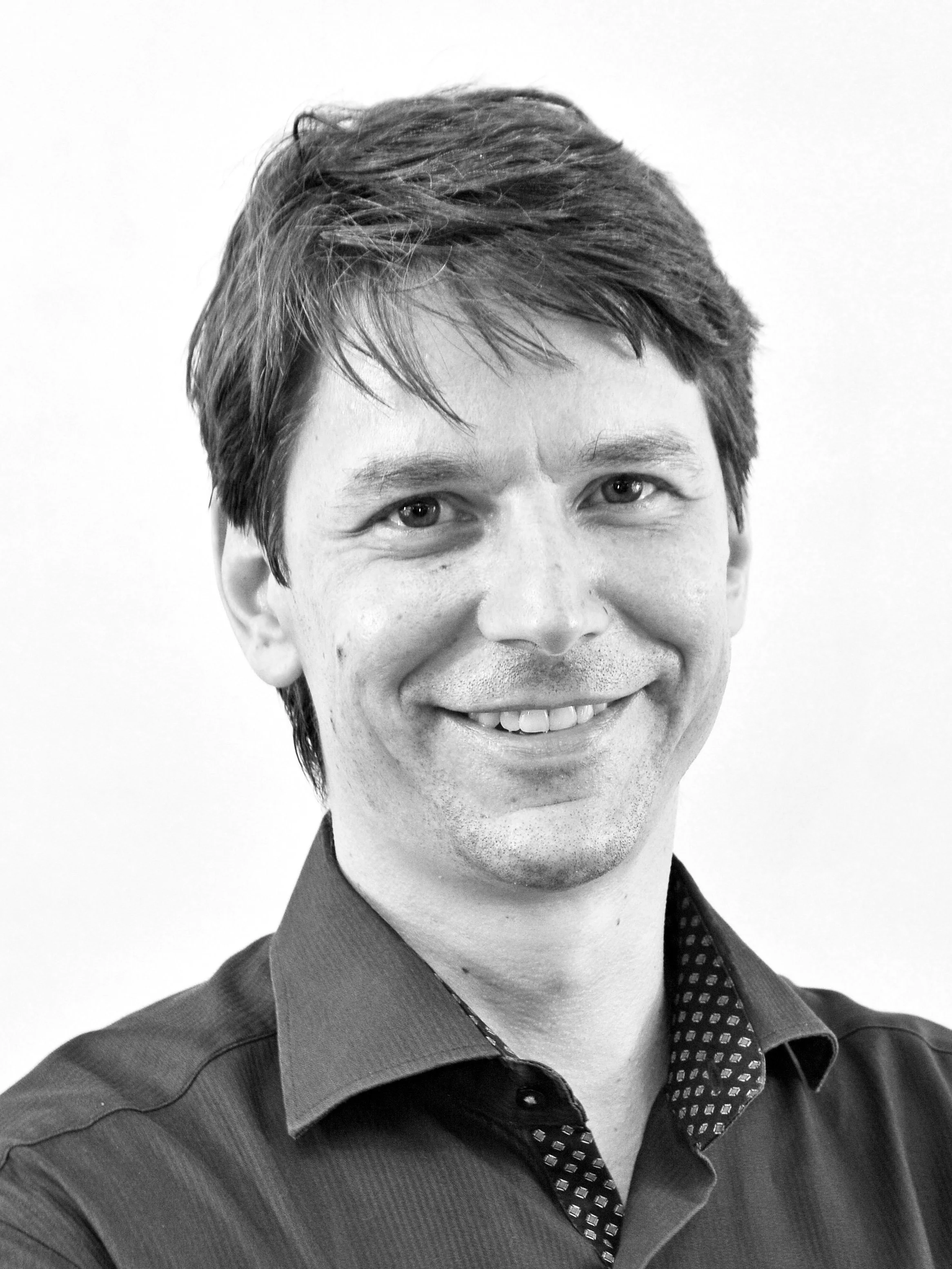
Urs Jäger
Chair of Sustainability VIVA Idea Schmidheiny, Associate Professor, INCAE Business School
We are fortunate to know Urs as Chair of Sustainability VIVA Idea Schmidheiny and as associate professor at INCAE Business School, focusing on general management and strategic change in emerging countries. Previously, Urs was part of the core faculty of the SIM programme in St. Gallen, where he also supervised final academic projects. Urs shared the notion of students’ intellectual attitudes – their conception of science’s key terms – as a particularly valuable signal for supervisors deciding whether and how to support a research mentorship.
Urs's thoughts on the subject
A peer called supervisor
“Students must know what they want to achieve. They have to ask the right questions, and answer them. The appropriate supervisor can help them accomplish this. It’s an illusion to think that a Master’s thesis is a scientific paper and context-independent (developing knowledge that draws you closer to “truth”). Everything has to do with context, relations among people, relations to data, relations to science itself. Students must be clear what they are buying into, before starting research. The challenge is that students often do not know which questions are relevant, as these emerge during the process. Besides the supervisor, the institution of the university (and how it organizes this process of match-making and helps the student to ask the right questions etc.) is important in helping them solve this issue.” (Urs Jäger)
A researcher's humility
“The first encounter with thesis work is to ask oneself what knowledge actually is. What does the student think is meant by knowledge and knowledge generation? Usually, this is the first discussion that I have with students who show interest in writing a thesis and ask me to supervise it. In this context, I detect various perspectives. The dominant perspective is that knowledge is objective and is represented by science. It determines methodology. Professors are the carriers of knowledge, and can convey to the student how knowledge generation takes place. The student has to demonstrate to the professor that (s)he can learn these methods and that the professor can give the student a good grade for it. The second perspective is predominantly driven by a career motive. Students say that the MA thesis is the last component that they need to accomplish their studies. The student needs a good grade, but is trying to reduce the time needed for completing the thesis. Hence, the motivation is to get done with the thesis as quickly as possible, with minimal resources invested in it. The expectation of the student towards the supervisor is: Make my life easy! The third perspective is that a student comes and confesses that he doesn’t yet quite understand what knowledge means. The student is searching, and the thesis helps to explore the question of what knowledge means for him/her. These are the students who enter the thesis process with a predominantly open mind.” (Urs Jäger)
Countless shades of supervision
“I have learned for myself not to challenge students concerning their particular perspectives on how to approach knowledge. Rather, I test them where they come from—without trying to change them. After all, this is the last component in a longer educational process that the students have gone through. They have already had substantial amounts of education, and are now giving a last effort that is pre-defined by their previous educational experiences.” (Urs Jäger)
Feedback eats grades for breakfast
“There are two aspects here to emphasize. First, my expectation as supervisor is that I am not confronted with the student as a typical researcher. My expectation is that the student has interest in the topic of research (and the topic to be researched). Second, I have the expectation that the student is willing to provide high quality. The drive to provide quality is a mindset that I expect. But the gap between what I can expect and what the result will be is massive. This has consequences for how I will evaluate the thesis. As a supervisor, I have two options. First, I delegate the thesis to some extent. Or, second, I reframe my proposition and view the student by taking the approach a typical consultant would take. A consultant is a connector between scientific methods and the practice. If the student manages to reach the level of a consultant, he or she is already performing very well. If the student can go a bit beyond that level and show that they can apply scientific methods as per the current academic practice in research, so much the better.” (Urs Jäger)
The purposeful scientific entrepreneur
“In their thesis, I expect students to produce insights that are stimulating for the field of practice to allow for a more profound thinking on a topic. In my field of qualitative research, I put them in a consulting context where they get lots of empirical experience with our partners, develop insights, and present them. The feedback of the partners is very important. My role as supervisor is to help them level up the quality of their work by phasing in my knowledge, too.” (Urs Jäger)
Why even bother?
“There should be a purpose to a thesis, but it does not have to be a purpose in the sense that is directly related to your work or conducive to your next job. I tell students that to some extent their studies may be the last opportunity to do something that is different. I would not set the parameters too narrowly. The thesis should satisfy their curiosity, e.g. the thesis work may have an aspect concerning the topic of sustainability to it, even if it is not directly related to later professional work.” (Urs Jäger)