

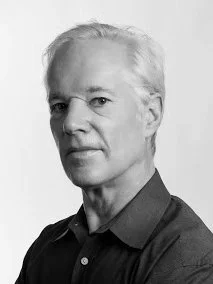
Steven Floyd
Emeritus Professor of Innovation and Entrepreneurship, University of Massachusetts Amherst (1946–2022)
We are fortunate to have known Steve as a colleague at the University of St. Gallen, where he was part of the core faculty of the SIM programme and supervised final academic projects; he was also Emeritus Professor of Innovation and Entrepreneurship at the University of Massachusetts Amherst. Steve’s academic writing seminar in 2014 had a long echo with Benjamin, who attended as a PhD student, and contributed to the early roots of this book. Steve brought up the idea of the paradoxes of good conduct in research, which the book’s chapter epilogues are framed around. With great sadness, we learned of Steve’s passing just months before the book’s release. He is thoroughly missed as an exceptional teacher, a generous colleague, and a thoughtful, kind person.
Steven's thoughts on the subject
A peer called supervisor
“I think what happens too often is that all the mentoring is around the substantive issues, the content. Mentoring might have somewhat of a blind spot on the process of research, like managing your personal workload, understanding the unwritten rules of the field, working through a reasonable process, that has boundaries, that is focused. I think part of making that more transparent to new supervisees in particular is to formalize it. To make explicit ideas such as “What constitutes a theory?”, “What is an audience?”, “How do you structure papers?” These kinds of things—formal work taken in as part of the curriculum, not just role-modelling, but actual formalization—helps supervisors (and in turn students) to internalize these ideas.” (Steven Floyd)
A researcher's humility
“Progressive research is built on previous thinking, on what we already know, and we want to make progress. Don’t always reinvent the wheel. We intend to speak to a real problem. We don’t want to deal with research questions which are not critical. And one of the big challenges in the academy has been to address big problems that we face as a society in the world. So if you do really good research, good defined as theoretical but also relevant, rigorous but also interesting, you have to recognize that research must combine the qualities that are embedded in these paradoxes.” (Steven Floyd)
Build well-dimensioned bridges
“In a particular case, you might lean more one way or the other. You might be more incremental or leapfrogging, more aggressive or less aggressive in terms of how far you stretch the wisdom.” (Steven Floyd)
Career serendipity
“I don’t think the substance of the project is as important as the process of skilled thinking that the thesis demonstrates. I think that’s where the practitioner community tends to be speaking out of both sides of their mouth. They say they really want critical thinking, but they doubt that the scientific approach develops that. They don’t make that connection because the substance of the document may not appeal to them as being something of interest from a practical perspective. If the student really went on an academic track—meaning more development of theory or empirical methods—it may or may not be seen as interesting or relevant.” (Steven Floyd)
Feedback eats grades for breakfast
“When considering what a thesis can accomplish, I think of this really on three levels of accomplishments. At the most basic, minimum level, the thesis should demonstrate an ability to do a research project that formulates questions, does a literature review, designs a study, and executes it. It should demonstrate mastery of a topic and of at least basic abilities. I think the minimum goal is to write a review article. That’s where the conceptual framework comes in. It’s a way to organize the literature. Then, of course, to demonstrate writing skills, language skills, as it is part of the minimum requirement. As the achievement becomes a more advanced accomplishment, then I would expect the document to identify a relevant problem of some significance in the world, one which is troubling or novel, which can be in the form of a research question. In this middle ground, there is also the requirement to demonstrate the ability to carry out a rigorous methodology. And then the skill that’s really difficult, and that therefore indicates a more advanced kind of accomplishment, would be to articulate and justify a research model or set of hypotheses. Another way to think about the highest level is to be able to say something of interest, both to academics and practitioners.” (Steven Floyd)
Rigour suggests approach
“Hands-on experience is very valuable. But the ability to conceptualize a problem and pursue it in a disciplined fashion is also important. Critical thinking is vital in developing a reasonable practical set of skills. Part of what theses contribute is the sense that you as a student were able to achieve some sort of excellence of your way of thinking, and were actually able to produce something of great value.” (Steven Floyd)
Skills and the will to grow
“Thesis writing is developing a way of thinking about the world. It is a way of focusing on a particular question, of identifying relevant problems, building basic knowledge around that problem, conceptualizing that knowledge base, trying to push that knowledge further by getting new data or theorizing. The way the process rolls out and into a thesis should reflect this way of thinking. This way of thinking can be applied throughout your career.” (Steven Floyd)
Theory is there to help
“You have parts of the work that have to be focused and parts that have to be broad. For example, research questions have to be highly focused. The theoretical background of those questions needs to be broad enough to support them. One of the problems I had as an editor of Journal of Management Studies was that I would see papers coming from North America that ignored research papers from Europe. That is of course much less of a problem nowadays, when you have to be broad to support a research question. You can’t answer a research question in North America any more that’s already been answered in Europe.” (Steven Floyd)
Throwing off a weight
“I think the people most subject to the problem of not finding the end point of their thesis, of overdoing, are those who think that the thesis is their life’s work, that it must be perfect. They tend to be the most committed, intelligent students. The key then is to recognize that this is not your life’s work. This is a particular project, a particular goal. You don’t need to give your whole life over to it. You need to work on it, but to keep it within the boundaries of the bigger picture. That is made much simpler by focusing in on what you’re trying to actually accomplish with your project. In my own PhD program, I witnessed a student who was probably the brightest person in the group. He never finished. His book got thicker and thicker and thicker and thicker and thicker, but he did not give up. He was convinced that he hadn’t made a contribution and that he had to keep pushing. He drove himself and everybody else crazy. Including his chair.” (Steven Floyd)