

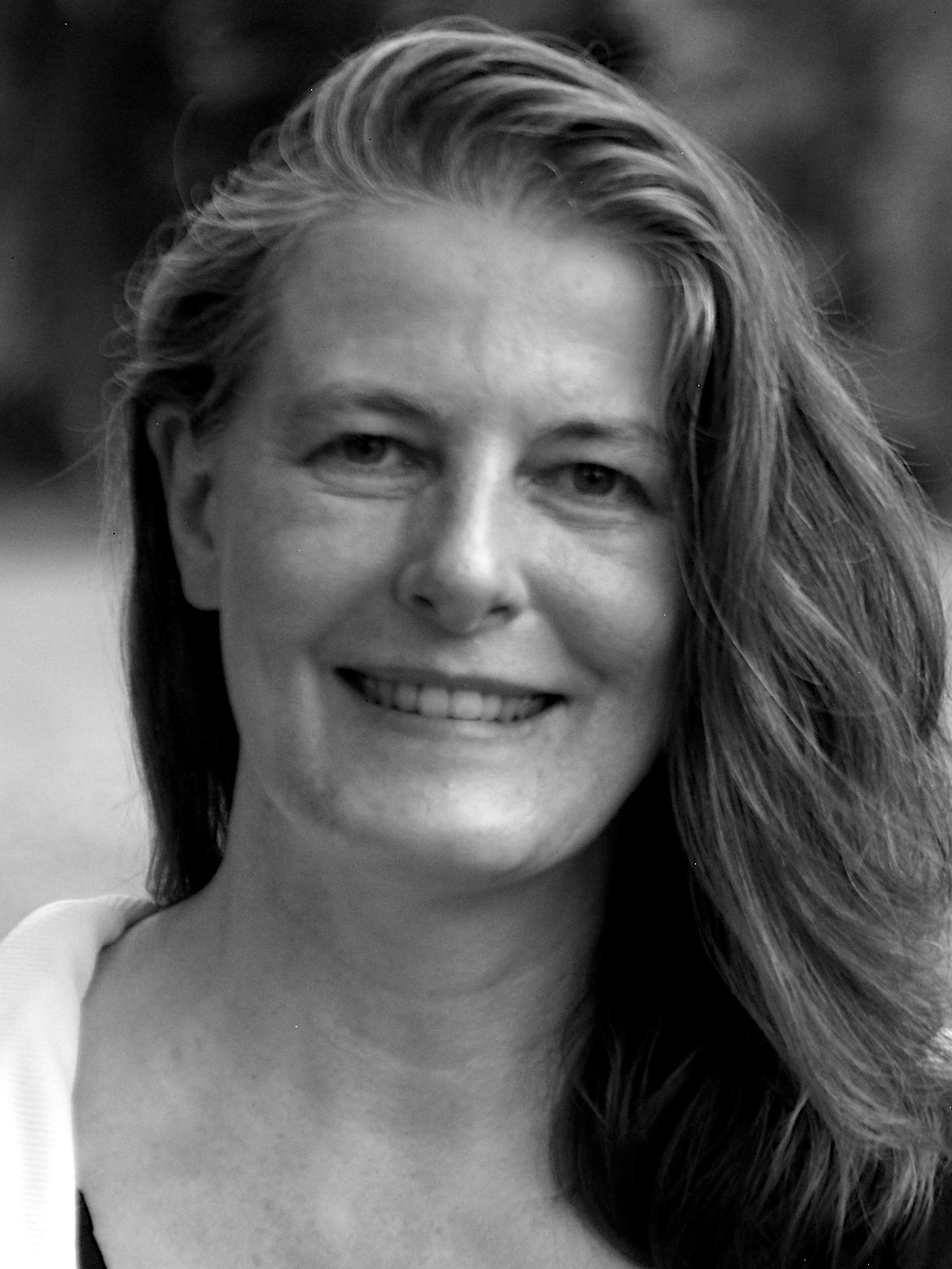
Gundula Bosch
Director, R3 Center for Innovation in Science Education (R3ISE), Johns Hopkins Bloomberg School of Public Health
We are fortunate to have won Gundula's cooperation after we learned of her work as Director of the R3 Center for Innovation in Science Education (R3ISE) at Johns Hopkins Bloomberg School of Public Health. The R3ISE center produces doctoral, masters, and certificate programs aiming to bring more critical thinking, interdisciplinary collaboration, and practical ethics considerations into graduate student training in biomedicine, health, engineering, and technology. Several distinct themes became particularly palpable in our discussion with Gundula: curiosity's role in transferring conceptual insights across topical borders, the role of imagination in unlocking why things are the way they are, and the interconnection between rigour, reproducibility, and responsibility.
Gundula's thoughts on the subject
Fortify your academic skills
“Einstein once said that imagination is more important than knowledge. It was not his general theory of relativity, but rather that he saw metaphysics. He enjoyed using his imagination. For students to adopt this mindset, they need to understand why it is critical to think like heroes in science. Einstein, Curie, and Darwin are good examples. I would start with asking the students: what made these heroes what they were? They were thinking about the world. They were exploring Why-questions. Ask what the problem is they are trying to solve (or contribute towards solutions). Why is something as it is? Why is the sunset coloured the way it is? These are the big questions that make one think differently. Soon one becomes aware that one lacks the skill set to overcome these hurdles. We don’t need to get discouraged by that. Usually, it means I have to develop a certain skill set, acquire a specific knowledge, read, collaborate. Who do I need to work with to do that? This allows people to focus on the skills that are necessary to solving those problems. It is a more goal-oriented approach, that requires putting yourself more into the background. In other words, it is not so much an environment for ‘ego’s’. You need to always enjoy the perspectives that other people can bring. The ‘how’ involves doing good science and research on the way to the discovery.” (Gundula Bosch)
Renewable research energy
“Outside-the-box-thinking starts—based on conversations with colleagues from multiple disciplines around the globe—with communication issues. The challenge is to find the same language, given the different educational backgrounds, e.g. social studies, the arts, or biochemical studies or health. We found that for adults, it is more difficult to overcome this challenge (similar to the challenge to learn a new language). At the same time, we found that the younger individuals are seemingly more open to applying concepts to different areas, more curious, and, in a constructivist sense, less entrenched in established patterns. They do not submit to pre-made patterns as easily.” (Gundula Bosch)
Rigour suggests approach
“Science rests on the three pillars of rigour, reproducibility, and responsibility. Ethics is firmly built into all three pillars. Responsibility, as a fundamental ethical concept, forms the basis for everything. What is rigour? Rigorous work involves everything that rests on intellectual honesty. Also, think about science as a constant process of self-improvement.” (Gundula Bosch)